Build Nigeria, Buy Nigeria
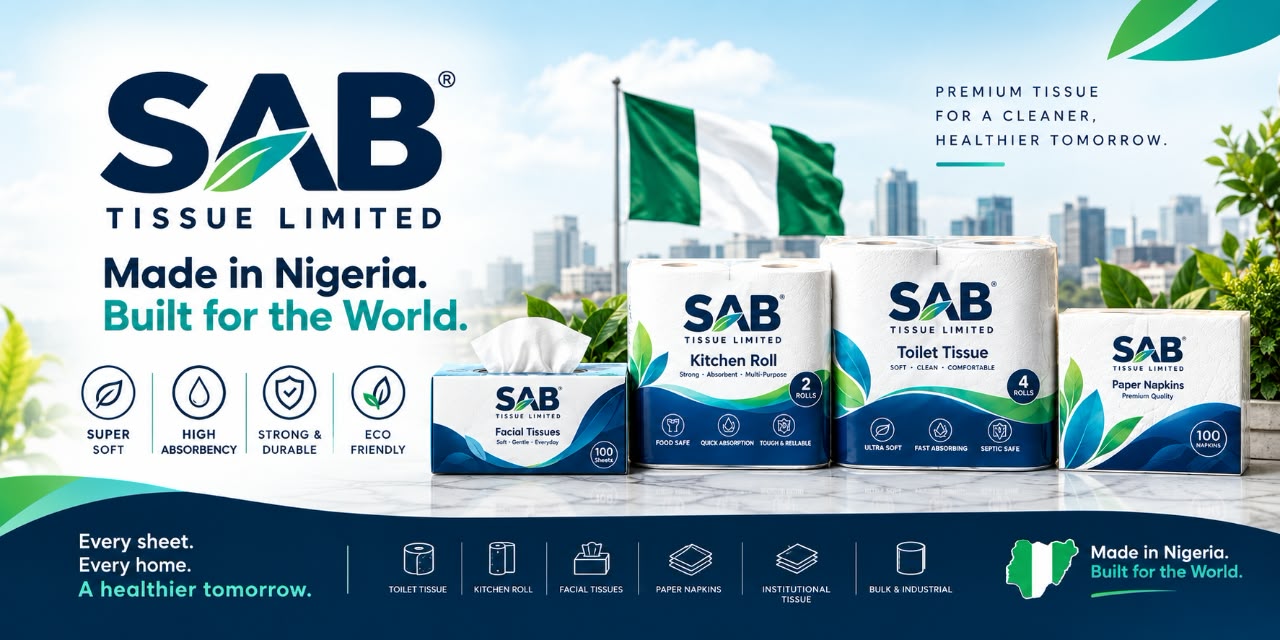
85% of FMCG products currently in Nigeria are imported. We are building the factory to change that.
SAB FMCG is building a tissue and hygiene factory at Alaro City. Full production starts in May 2027. Explore the plan, meet the team, or talk to us.
Keep exploring
What we make, how we get there, and who builds it
Our idea
Why a tissue factory in Lagos, and why now.
Read our idea →Five everyday products
Toilet paper, kitchen towel, facial tissue, napkins, sanitary pads and, later, baby diapers.
See the range →Be in the first team
Four leadership roles are filled and seven are still open. Apply now, while the team is still being built.
View open roles →
Our idea
A manufacturing company for a market that has waited long enough.
Around 85% of the tissue Nigeria uses is imported. Every roll that arrives from abroad carries freight, currency risk and waiting time before it reaches a shelf.
SAB's idea is simple: make everyday tissue and hygiene products in Lagos, for Lagos and the rest of Nigeria. We start with the products people buy every week. Once the converting plant runs well, we add our own pulp and then serve other African markets.
How we get there
Four steps, one company.
Convert
Phase 1: a 15-tonne-per-day converting plant at Alaro City, with two identical toilet-roll lines.
Make the pulp
Phase 2: a 30-tonne-per-day integrated mill with its own jumbo-roll production, and a sanitary pad line.
Expand
Phase 3: factories in four African countries, still to be chosen.
Widen the range
Phase 4: wipes, baby diapers, adult incontinence products and our own distribution.
Origin
Sabo. Fresh.
SAB comes from the Hausa word sabo, meaning fresh.
SAB FMCG Limited starts with converting. Two identical toilet-roll lines at Alaro City turn jumbo rolls into finished consumer products. Integrated pulp and jumbo-roll production comes later, in Phase 2.
Zhuhai Hongta Renheng Packaging is our technical partner. It supplies, operates and maintains the production lines for an initial 10 years, and it is also a shareholder.
Bawa Daniel Salka is the Founder and Chief Executive Officer. Mrs Saraya Danjuma Salka is the Co-founder and Managing Director.
Products
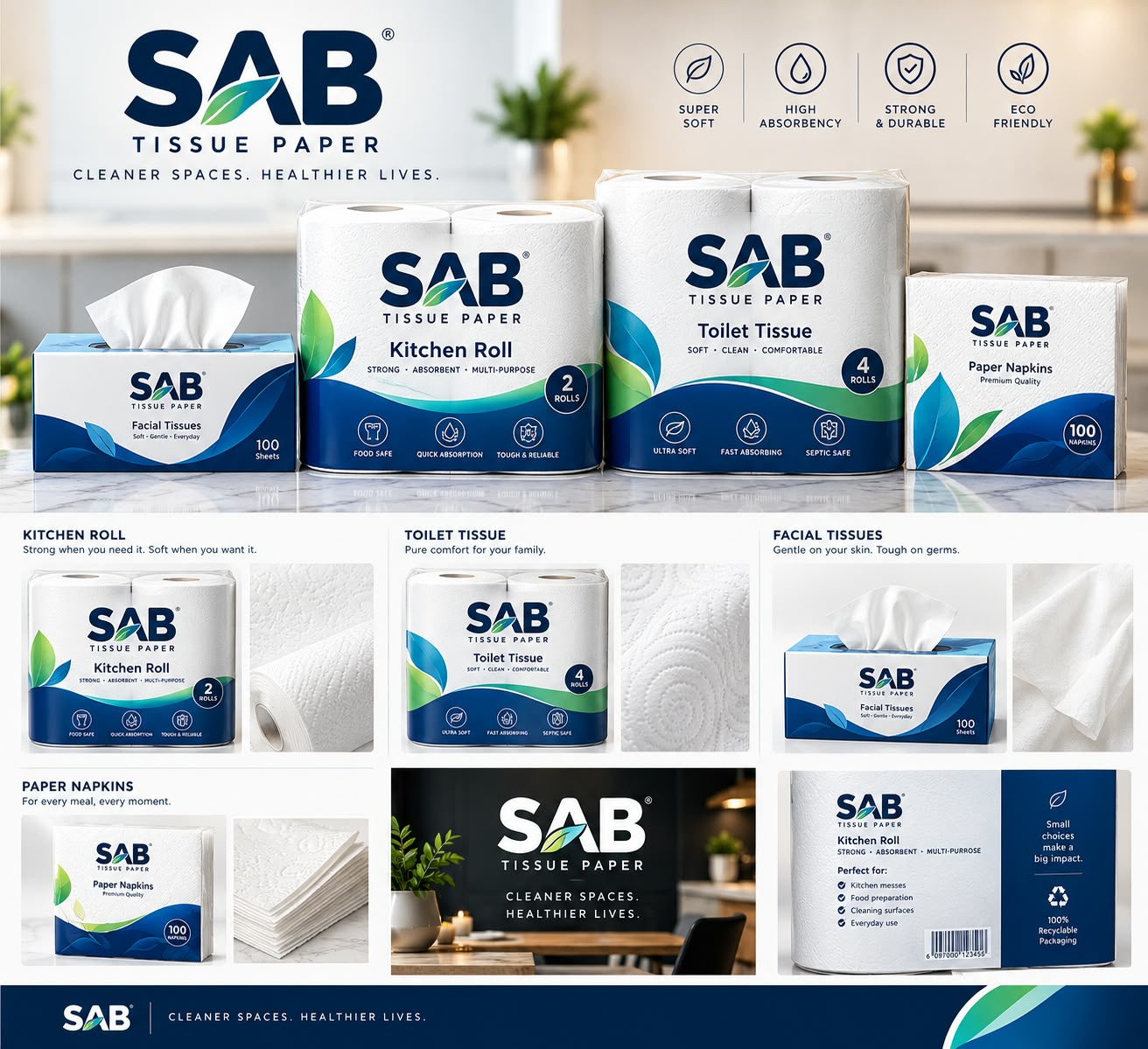
Tissue, toilet paper, wipes, sanitary pads and baby diapers.
Four tissue and paper lines start in Phase 1. Sanitary pads follow in Phase 2 on a separate line at the same site. Wipes, baby diapers and adult incontinence products come in Phase 4.
-
 Phase 1
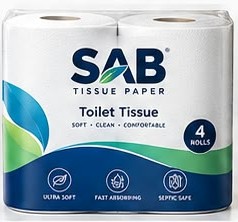
Toilet paper
Standard toilet tissue roll, the largest share of Phase 1 output.
-
 Phase 1
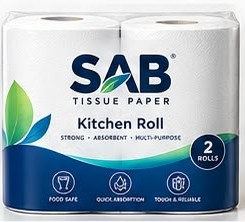
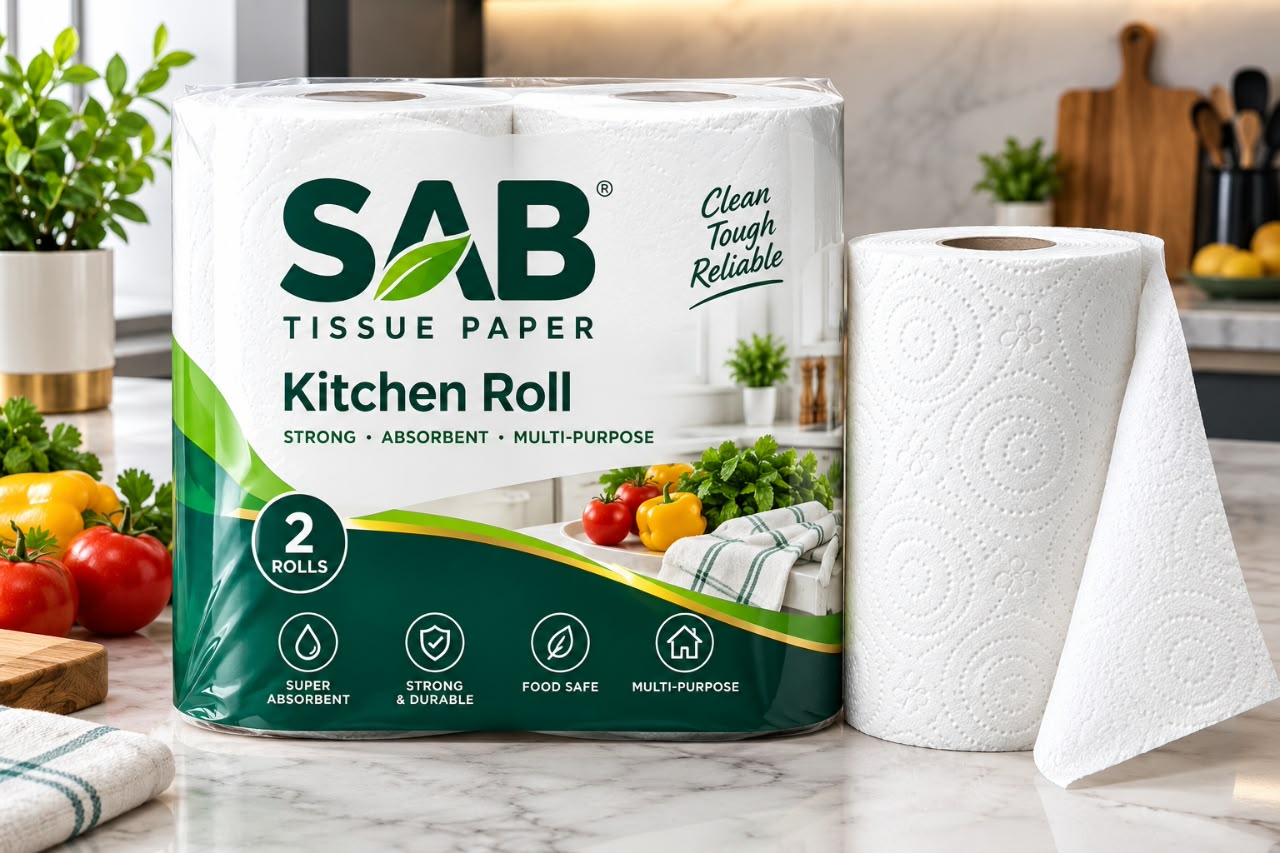
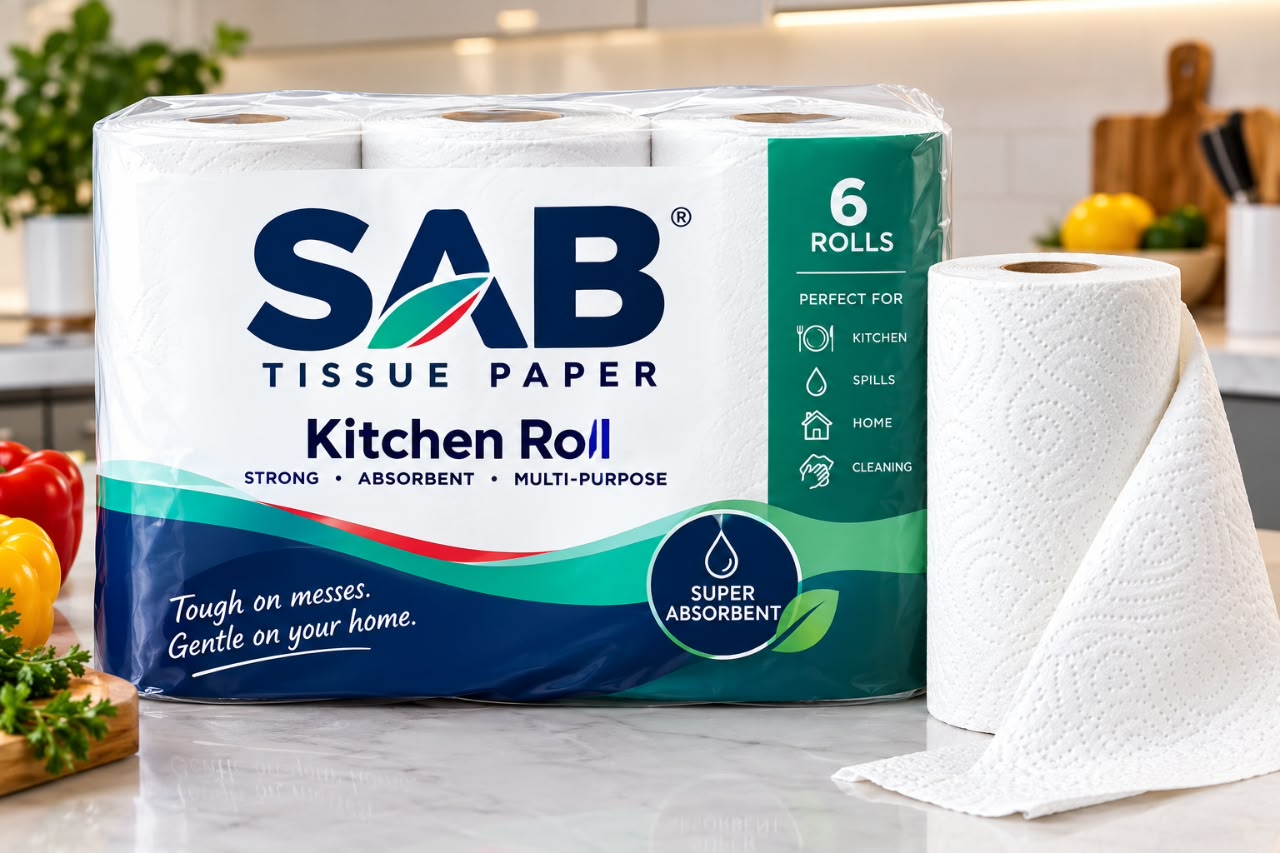
Kitchen towel
Absorbent roll for kitchens, with perforated sheets.
-
 Phase 1
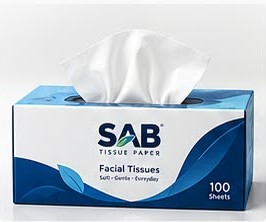
Facial tissue
Soft facial tissue in a pop-up box.
-
 Phase 1
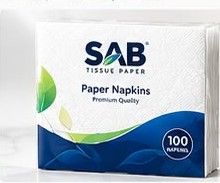
Napkins
Table napkins in pack sizes for every meal.
-
Phase 2
Sanitary pads
Feminine hygiene pads in 8-packs, on a dedicated line. Photo to follow.
-
Phase 4
Paper wipes
Wipes in soft packs for everyday cleaning. Photo to follow.
-
Phase 4
Baby diapers
Diapers for infants and toddlers, sized by weight. Photo to follow.
| Product | Share of output | Daily production |
|---|---|---|
| Toilet paper | ~70% | 105,000 rolls |
| Kitchen towel | ~20% | 13,600 rolls |
| Facial tissue | ~6% | 11,250 boxes |
| Napkins | ~4% | 6,000 packs |
Phase 2 sanitary pads: planned production of 40,000 packs per day. Figures are indicative only.
Roadmap
Ten years, four phases, one clear exit.
We are building a company that makes what Nigeria buys every day, then grows it across Africa and, in time, onto the stock market. Each phase has to prove itself before the next one starts.
Before the first roll: now to May 2027
The factory cannot sell a single pack until these are done.
- Executive team in place. CEO, Managing Director, COO and CFO are appointed; seven leadership roles are still open.
- NAFDAC product registration for facial tissue and napkins, the Phase 1 products that need it.
- SON MANCAP certification mark for the products.
- SAB trademark registered in Nigeria, with protection planned for the Phase 3 markets.
- Halal certification, to open access to the northern Nigerian market.
- Equipment installed, tested and handed over by our technical partner.
Phase 1 · May 2027
Converting plant at Alaro City
- 15 tonnes per day, on two identical toilet-roll lines.
- Four products from day one: toilet paper, kitchen towel, facial tissue and napkins.
- Jumbo rolls are bought in until our own pulp and paper come on line in Phase 2.
- Our technical partner operates and maintains the lines for an initial 10 years.
What it unlocks: a working factory, products on shelves in Lagos, and the sales record that Phase 2 needs.
Phase 2 · Year 3
Integrated mill and sanitary pads
- A 30-tonne-per-day integrated mill that makes its own jumbo rolls on site.
- A sanitary pad line, planned at 40,000 packs per day.
- Reserved space at Alaro City, so the mill builds on the first phase rather than moving.
What it unlocks: control of raw material cost and quality, and a hygiene range made in Nigeria.
Phase 3 · Year 5 onward
Factories across Africa
- Factories in four African countries, still to be chosen.
- Each new factory follows the same model, so the second and third sites are faster and cheaper to build.
- Expansion under the African Continental Free Trade Area (AfCFTA).
What it unlocks: a pan-African supply network, and a business too big for one market.
Phase 4 · Year 7 onward
A wider range and our own route to market
- Wipes, baby diapers and adult incontinence products.
- A recycled-fibre pulp line at Alaro City, so the mill runs on less virgin pulp.
- Our own distribution arm, to get products into shops and homes directly.
What it unlocks: a fuller household range, lower costs along the chain, and control over how products reach customers.
The ten-year view
Years are counted from the start of full production in May 2027.
| When | What happens | The test |
|---|---|---|
| 2027 | Full production starts | Products in shops across Lagos |
| Year 3 | Integrated mill and sanitary pads | Our own jumbo rolls and a hygiene line |
| Year 5 | First factories outside Nigeria | A second country running to the same standard |
| Year 7 | Wider range, recycled pulp and own distribution | Products beyond tissue, sold direct |
| Year 10 | A mature, profitable group | Ready for a listing on the Nigerian Exchange |
The exit
How shareholders get their return.
Our long-term goal is a listing on the Nigerian Exchange (NGX). A listing gives shareholders an open market to buy and sell shares, and it gives the company access to a much wider pool of capital.
Before a listing, shareholders have other routes to liquidity: the company or the founders can buy shares back at fair market value, or the business can be sold. After a listing, the largest shareholders usually agree a lock-up period before they sell, so that the share price is not flooded with stock at once.
1. Build the record
Each phase is funded only once the one before it has run to plan.
2. Value at checkpoints
The business is valued at regular points, so shareholders can see progress and the price is set on evidence.
3. List or sell
A listing on the NGX is the goal. A sale or buy-out is the alternative if the market is not right.
Share prices, valuations and timing depend on results and on market conditions. Nothing here is a promise of return.
Facility
Alaro City, Lagos.
The plant sits in Alaro City, a master-planned industrial estate on the Lekki-Epe corridor, about 35 minutes from Lekki Deep Sea Port.
Production hall
About 4,000 m² under one roof, with straight-line material flow from jumbo roll to packed goods.
Estate services
Served by the Alaro City estate infrastructure.
Room to grow
Reserved space on site for the Phase 2 mill and hygiene line.
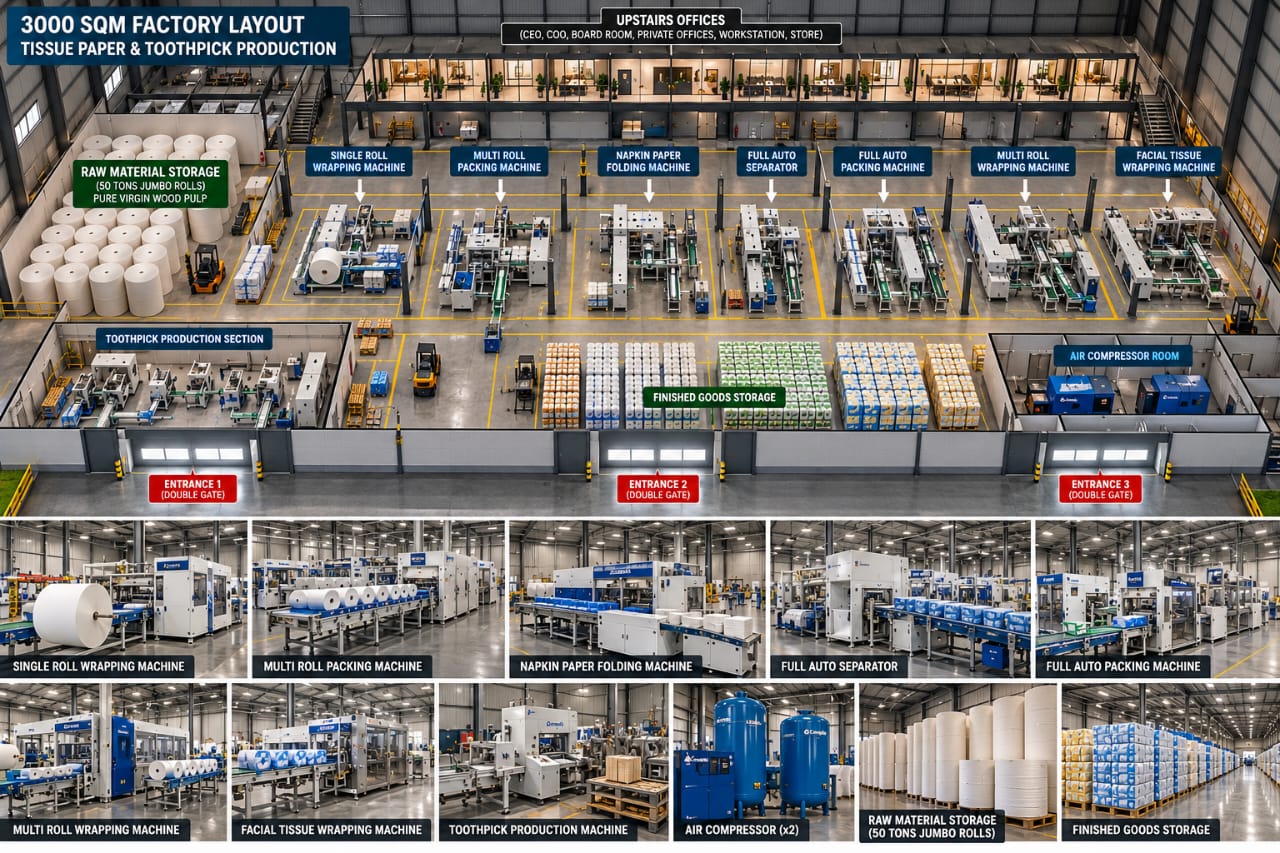
Factory design and layout
One straight line from raw material to the warehouse.
Jumbo rolls come in and sit in raw material storage, close to the converting lines. Lines wrap, fold and pack each product in turn. Finished goods move to their own storage area, ready for dispatch. Offices sit on the upper floor, above the hall. Three double-gated entrances serve the building.
Governance and ownership
Structured to be built well and to outlast its founders.
Founders and board
Founder and CEO: Bawa Daniel Salka. Co-founder and Managing Director: Mrs Saraya Danjuma Salka.
The Board of Directors will be arranged.
Shareholding after Phase 1
Shareholding after Phase 2
Investors
Own a share of a factory that makes what Nigeria buys every day.
SAB FMCG is a pre-construction company with a clear plan, a named technical partner and a stated route to a stock market listing. This page sets out the opportunity, how value is built, the exit routes and the risks. It does not promise a return.
The opportunity
A gap that is already there.
Around 85% of FMCG products sold in Nigeria are imported. The domestic market is large, with 225 million consumers, and the Phase 1 plant is planned to produce 15 tonnes of tissue per day at Alaro City, with full production starting in May 2027.
Shareholders own shares in SAB FMCG Limited. Their value rises or falls with the business.
How value is built
Each phase has to prove itself before the next one starts.
Phase 1
Converting plant and first products, from May 2027.
Phase 2
Integrated mill and sanitary pads, in Year 3.
Phase 3
Factories in four African countries, from Year 5.
Phase 4
Wider range and own distribution, from Year 7.
Shares and valuations are set at checkpoints tied to the results of each phase. See the Roadmap for the full timeline.
Exit routes
How shareholders can realise their stake.
Listing
Our long-term goal is a listing on the Nigerian Exchange (NGX), once the business is proven.
Buy-back
The company or founders can buy shares back at fair market value.
Sale
The business or its shares can be sold to a buyer if a listing is not the right route.
After a listing, the largest shareholders usually agree a lock-up period before they sell.
Risks
What could go wrong.
Investing in an early-stage company is risky. You could lose some or all of the money you put in.
- The factory is not yet built, and full production depends on the timeline holding.
- Regulatory approvals (NAFDAC, SON, Halal certification and trademark) must be granted.
- Raw material supply and pricing can change.
- Competition from imported and local brands may be stronger than planned.
- Currency movements affect equipment costs and imported inputs.
- Returns depend on sales and market conditions. No return is guaranteed.
Next step
Request the business plan.
Serious investors receive the full business plan and financial model after an introductory call. Email us to arrange one.
This page is for information only. It is not an offer of securities. Any investment is subject to a formal offer document, its terms, and the requirements of the Securities and Exchange Commission, Nigeria. Please take independent advice before investing.
Careers
The team that will run the plant day to day.
Four leadership roles are filled. Seven more are open and will be filled before Phase 1 commissioning. To express interest, email admin@sabfmcg.com.
Leadership team
- Bawa Daniel SalkaChief Executive Officer
- Mrs Saraya Danjuma SalkaManaging Director
- Funmi AlabiChief Operating Officer
- Edward Oche OjoboChief Financial Officer
Open roles
- Deputy Managing DirectorOpen
- Head of Operations and Plant ManagerOpen
- Head of Sales and DistributionOpen
- Head of Marketing and BrandOpen
- Head of Engineering and MaintenanceOpen
- Head of Quality AssuranceOpen
- HR DirectorOpen
Contact
Get in touch.
Investors, distributors, modern-trade buyers and suppliers are all welcome. For vendors, please send a company profile with your product range and machine specifications.
Press enquiries: use the email link and state the publication in the subject line.
-
Emailadmin@sabfmcg.com
-
Phone and WhatsApp+234 808 111 9984WhatsApp
-
LocationAlaro City, Lekki-Epe Corridor, Lagos, Nigeria